Leading Across the Pacific: What Great Leadership Looks Like in Samoa, Fiji and Tonga
Strong Pacific workplaces blend cultural values with modern management. Here's how leaders in Samoa, Fiji and Tonga can build capability without losing what makes their teams strong.

Across Samoa, Fiji and Tonga, leadership looks different than it does in Sydney or Auckland — and that's exactly as it should be. Pacific workplaces are shaped by deep cultural values: respect for elders and hierarchy, collective responsibility, and relationships that extend well beyond the office walls. The strongest leaders in the region don't abandon those values when they step into a management role. They build on them.
Yet many leadership programs imported from overseas miss this entirely. They assume a Western, individualistic workplace where a "good leader" is assertive, direct and constantly self-promoting. In a Pacific context, that same behaviour can read as disrespectful or simply out of place. The result is well-meaning training that feels irrelevant — and leaders who learn to perform rather than to lead.
The leadership challenge in the Pacific
Pacific organisations are growing fast. Tourism, public service, finance, logistics and telecommunications all need capable managers. But the pathway into management is often informal: you're good at your job, so you're promoted. Suddenly you're responsible for people, performance conversations, conflict and change — with little structured preparation.
Add in geography and time zones, and the gap widens. A manager in Apia leading a team with members in Auckland and Brisbane has to communicate across cultures, expectations and working norms every single day.
What works: leadership built on Pacific values
Effective leadership development in the Pacific does three things at once:
- Honours cultural foundations. Respect, service and relationship-building aren't soft skills here — they're the operating system. Great training treats them as strengths to build on, not obstacles to "modernise" away.
- Teaches the practical craft of management. Setting clear expectations, giving feedback in a way that maintains dignity, delegating without micromanaging, running meetings that actually move work forward. These are learnable skills, and they translate across every industry.
- Connects to real scenarios. Generic case studies about hypothetical tech startups don't land. Training that uses situations your people actually face — a team member who's also extended family, a customer complaint that needs a culturally-aware response, a change that disrupts long-standing routines — that's what sticks.
Why delivery format matters
Not every organisation can fly a facilitator in for a week, and not every team learns best in a single intensive. The most effective Pacific programmes blend formats: live online sessions that bring people together across islands, short practical modules people can do around their work, and in-person intensives where the real practice happens. Coaching layered on top keeps the learning alive long after the workshop ends.
A starting point
You don't need a perfect plan to start developing your leaders — you need a clear next step. A free 30-minute conversation about your team, your goals and the challenges you're facing is often enough to map the right path forward. Whether you're in Apia, Suva, Nuku'alofa or leading a Pacific team from Auckland, the principles are the same: build on what's strong, teach the craft, and connect every skill to the work your people actually do.
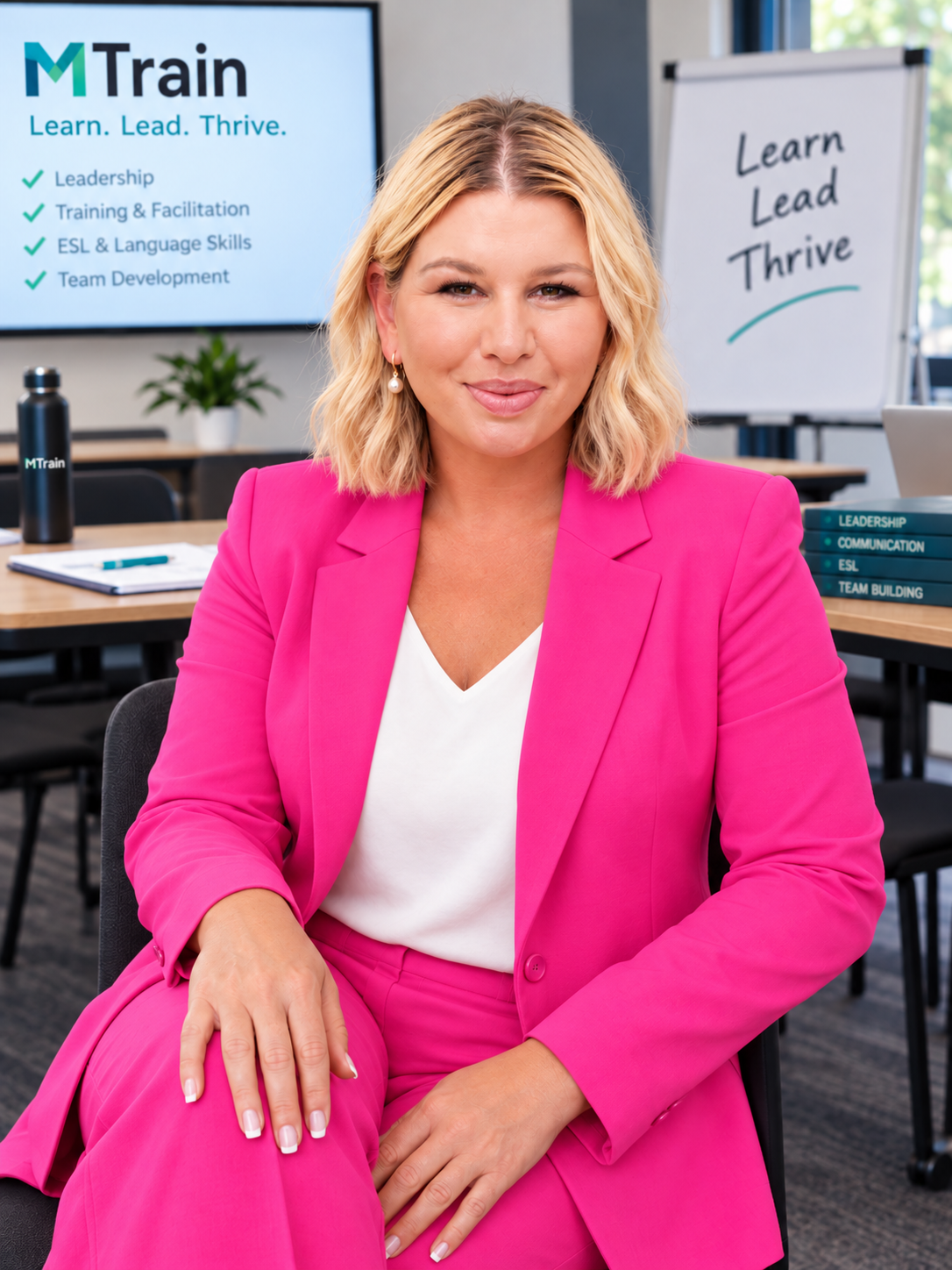
Amy Morris
Trainer & Assessor | ICF Master Certified Coach (MCC) | Leadership & Performance Specialist
Amy brings extensive experience across business development, sales leadership, organisational performance, training and human development. An ICF Master Certified Coach (MCC) and Master Practitioner in NLP, coaching and hypnosis, she combines deep expertise in human behaviour with practical commercial experience. Her capabilities span leadership development, high-performing teams, behavioural profiling, emotional intelligence, facilitation and instructional design. Amy is passionate about helping organisations unlock the potential of their people through engaging, practical and customised learning experiences. Based in New Zealand, working across Australia, New Zealand and the Pacific.
You Might Also Like
Continue your learning journey with these related articles